Sublimation Coffee Mug Mockup: A Practical Tool for Streamlined Product Visualization
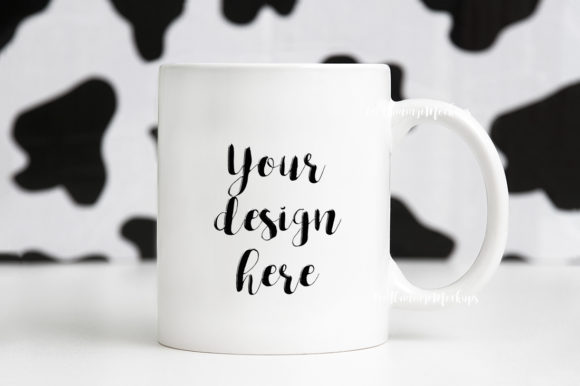
Presenting a design on a blank digital canvas is one thing. Showing it in a realistic, lifestyle-oriented setting is another entirely. For creators, small business owners, and marketing professionals who need to communicate a product vision quickly, the Sublimation Coffee Mug Mockup offers a direct path from concept to visual proof. This particular mockup, featuring a clean black-and-white 11oz mug set against a cow print background, is designed to do one thing well: let your artwork or text take center stage without requiring advanced design skills or expensive software setups.
Whether you are preparing social media content, building a product listing for an online shop, or creating presentation materials for a client, understanding how to integrate a mockup like this into your workflow can save hours of production time. The goal is not to overwhelm you with features, but to show you exactly how this digital file fits into practical, everyday creative and business processes.
What This Mockup Offers and Where It Belongs in Your Process
At its core, this is a 1 Smart Object PSD file paired with a high-resolution JPG image (3504 x 2336 px, 300 dpi, RGB). The smart object layer is set to multiply, which means your design will blend naturally with the mug's highlights and shadows. This is a critical detail for anyone who has struggled with flat, unnatural-looking mockups in the past. The background and the mug are on the same layer, and the objects in the scene cannot be moved. That constraint is intentional: it ensures that every time you use the file, the lighting, perspective, and background texture remain consistent.
Where does this fit in a broader workflow? Typically, it sits after your design is finalized and before you publish or share it. If you are working on a product launch, you might use this mockup during the final review stage to show stakeholders how the design will appear in a real environment. If you are a content creator, you might use it during your content planning phase to generate visuals that align with a specific aesthetic. The cow print background, in particular, lends itself to bold, contrast-driven presentations, making it suitable for vintage-style illustrations, quote graphics, or minimalist typography.
How to Integrate This Mockup into Your Creative Workflow
The practical value of any mockup lies in how easily it fits into your existing toolkit. This file works with Adobe Photoshop CS4 and above, as well as Pixlr online editor. That compatibility alone makes it accessible to a wide range of users, from seasoned professionals who rely on Photoshop daily to freelancers or hobbyists who prefer browser-based editing.
Preparation: What You Need Before Opening the File
Before you even unzip the download, take a moment to prepare your design. Because the smart object layer uses a multiply blending mode, your artwork should ideally have a transparent background or a white background if it includes solid elements. Dark or heavily saturated designs tend to render well because the multiply effect deepens the shadows and integrates the artwork into the mug's curvature. If your design includes thin lines or light colors, test it first on a small section to ensure the contrast remains legible against the mug's white ceramic surface.
The downloaded files include a help file with instructions. Do not skip reading it. The PSD layers are hidden by default, and the instructions explain exactly how to reveal the smart object layer and place your image. This is a small step that prevents frustration, especially if you are accustomed to mockups where layers are fully visible from the start.
Placement: Working with the Smart Object Layer
To place your design, open the PSD file in Photoshop or Pixlr. Locate the smart object layer (it is typically labeled clearly). Double-click the thumbnail to open the smart object, paste or place your design, save, and close. The mockup updates automatically. This non-destructive workflow means you can swap designs repeatedly without damaging the original scene. It is ideal for testing multiple variations of a quote, logo, or illustration in one sitting.
Because the cup and background are on a single layer, you cannot reposition the mug or change the background independently. This limitation is less restrictive than it sounds. It simplifies the file structure and eliminates the risk of accidentally misaligning elements. If you need a different background, you would use a separate mockup file. For consistent branding, this simplicity is an advantage: you know exactly what the final image will look like every time.
Practical Use Cases Across Different Roles
Understanding where a tool fits in your specific context makes it easier to use consistently. Here are several scenarios where this mockup serves a clear purpose.
For Social Media Content and Instagram Posts
If you manage an Instagram account for a brand or personal project, visual consistency matters. The black-and-white mug with a cow print background creates a distinctive, recognizable aesthetic. Use it to showcase daily quotes, product teasers, or behind-the-scenes design samples. The high-resolution output ensures the image remains sharp even on larger screens. Because the file is a JPG and PSD, you can easily resize or crop the final export for different platform dimensions.
For E-commerce Product Listings
When selling physical or digital products online, imagery that conveys a lifestyle context often outperforms plain product shots. This mockup lets potential buyers see how a design would look on a finished mug. Use it as a secondary image in your listing to complement flat lay photos or detailed product views. The 3504 x 2336 px resolution is sufficient for most e-commerce platforms, and the RGB color space ensures vibrant on-screen presentation.
For Client Presentations and Portfolio Work
If you present design concepts to clients, a realistic mockup communicates professionalism. Instead of showing a logo or illustration floating in white space, place it on the mug. The cow print background adds visual interest without distracting from the design itself. You can include the mockup in a presentation deck, a PDF portfolio, or a web design layout. The simple, minimal composition allows the client to focus on the artwork and how it maps onto a physical product.
For Vintage Illustrations and Quote Displays
The black-and-white color scheme pairs naturally with vintage-style line art, hand-lettered quotes, and retro illustrations. The cow print texture adds a subtle organic feel that complements rather than competes with the artwork. If you create digital art for print-on-demand products, this mockup gives you a quick way to generate marketing visuals without staging a photo shoot.
Observations on Usability and Efficiency
Mockups are productivity tools, but their value depends on how well they integrate into your routine. Here are a few observations that may help you decide when and how to use this file.
Speed of execution. Once you have read the help file and placed your first design, subsequent swaps take less than two minutes. That speed matters when you are producing content in batches or iterating on design options for a client.
Consistency across outputs. Because the scene is static, every image you generate shares the same lighting, angles, and background. This uniformity is helpful for building a cohesive social media feed or product catalog. It also simplifies quality control: if the first image looks good, the rest will too, provided your designs are prepared correctly.
Learning curve. For users familiar with Photoshop smart objects, this mockup requires no explanation. For beginners, the help file offers clear steps. If you prefer using Pixlr, the process is similar: open the PSD, locate the smart object, and replace the content. The learning investment is minimal, and the payoff is repeatable.
Long-Term Use and File Management
Digital files like this one are assets you can use repeatedly. To get the most value over time, establish a simple organizational habit. Keep the original PSD and JPG in a dedicated folder. When you generate a new design, save the updated PSD with a descriptive filename, such as Mug_Mockup_Quote1.psd. This makes it easy to revisit and modify past designs without starting from scratch.
Because the downloaded files do not contain watermarks or text, the output is clean and professional. You can use the generated images for commercial or promotional purposes without needing to edit out branding. That freedom is especially useful for entrepreneurs and small business owners who need ready-to-publish visuals quickly.
Working Within the Constraints for Better Results
The most effective users of any mockup understand its constraints and work with them rather than against them. In this case, the mug and background are locked together. If you need a different background or a different mug angle, you would need a different file. But within this file, the fixed composition ensures that you do not waste time adjusting layers or worrying about perspective mismatches.
The multiply layer mode is another feature that rewards thoughtful design preparation. If your artwork has a white background, the white areas become transparent, allowing the mug texture to show through. If your artwork contains gradients or soft edges, test how they interact with the multiply effect. A quick preview can save you from exporting an image that looks muddy or washed out.
Finally, consider the resolution. At 3504 x 2336 pixels, the output is suitable for both web and print use at moderate sizes. For social media, that resolution gives you flexibility to crop or resize without losing detail. For small printed materials, such as flyers or lookbooks, the image holds up well at standard sizes.
Practical Summary for Smooth Integration
To integrate this sublimation coffee mug mockup into your own work or routine, follow these practical guidelines:
- Read the included help file before opening the PSD. The layers are hidden by default, and the instructions clarify the exact steps.
- Prepare your design with transparency in mind. The multiply layer mode blends artwork into the mug surface, so avoid heavy white borders unless they are intentional.
- Use the smart object workflow to swap designs non-destructively. This preserves the original scene and lets you generate multiple versions from one file.
- Keep the PSD organized in a project folder. Name each saved version clearly so you can retrieve or update it later.
- Test the first export at full resolution to confirm that colors and contrast appear as expected. Make adjustments to your design file if needed before producing the final batch.
- Use the JPG as a quick preview or as a fallback if you do not need to edit the PSD further. The JPG is already rendered and ready for immediate use.
Mockups are not the star of the creative process; the design is. But a well-chosen mockup makes the design easier to evaluate, share, and sell. This sublimation coffee mug mockup serves that purpose with a clean, minimal aesthetic and a workflow that stays out of your way. Whether you are posting on Instagram, building a product page, or presenting to a client, the file gives you a reliable foundation for visual communication without unnecessary complexity.
The best tools disappear into the background of your workflow. This mockup does exactly that, letting your work speak for itself.